
Dehydration and Performance in MMA
The Impact of Dehydration on Sports Performance: A Comprehensive Analysis Dehydration’s Impact on an MMA Fighter’s Performance In the high-intensity world of mixed martial arts (MMA), where split-second decisions and peak physical performance are crucial, dehydration can have a profound impact on an athlete’s ability to compete effectively. Let’s explore a specific example of how dehydration can affect the performance of an MMA fighter: Scenario: John, a professional MMA fighter, is preparing for a high-stakes match. In the days leading up to the fight, he is determined to make weight for his division, so he resorts to aggressive fluid restriction and intense sweating techniques to shed excess pounds quickly. Effect on Performance: Dehydration, the condition of insufficient fluid levels in the body, has far-reaching consequences on overall health and well-being. Its effects are particularly pronounced in the realm of sports performance. This comprehensive report delves into the intricate relationship between dehydration and athletic performance, exploring medical data, case studies, clinical insights, and real-world examples to highlight the critical importance of hydration for optimal sports achievements. 1. Physiology of Dehydration and Sports Performance Dehydration disrupts the delicate balance of bodily functions, leading to a cascade of physiological changes that detrimentally affect sports performance. The body relies on water for thermoregulation, nutrient transport, waste elimination, and maintaining blood volume. When fluid levels decrease, the body’s ability to carry out these essential functions is compromised. a. Thermoregulation Impairment Dehydration hampers the body’s ability to regulate temperature during physical exertion. Elevated core body temperature not only decreases exercise capacity but also increases the risk of heat-related illnesses such as heat exhaustion and heatstroke. b. Cardiovascular Strain Reduced blood volume due to dehydration leads to increased heart rate and decreased stroke volume. This compromises the delivery of oxygen and nutrients to working muscles, resulting in early fatigue and diminished performance. 2. Adverse Effects of Dehydration on Sports Performance Even mild dehydration can have a significant impact on athletic performance, regardless of the duration of the activity. Studies have shown that as little as 2% dehydration can lead to noticeable reductions in physical and cognitive performance. a. Endurance Performance Dehydration impairs endurance by reducing the body’s capacity to maintain a stable core temperature. This leads to earlier onset of fatigue, decreased exercise tolerance, and diminished overall endurance. b. Strength and Power Performance Dehydration affects strength and power activities by decreasing muscle contractility and increasing perceived effort. Athletes may experience reduced muscle strength, power output, and anaerobic performance. c. Cognitive Function and Decision-Making Dehydration can impair cognitive function, including attention, memory, and decision-making. This can result in poor judgment, slower reaction times, and increased risk of accidents during sports activities. 3. Case Studies and Clinical Insights Numerous case studies have highlighted the detrimental effects of dehydration on sports performance. a. Case Study: Marathon Runners A study published in the “Journal of Athletic Training” examined the impact of dehydration on marathon runners. It found that even mild dehydration led to significant reductions in performance, with dehydrated runners exhibiting slower race times and increased perception of effort. b. Clinical Insights: Soccer Players Research conducted on soccer players revealed that dehydration during match play led to impaired sprint performance, reduced dribbling ability, and decreased accuracy in passing and shooting. 4. The Importance of Proper Hydration Athletes are advised to prioritize proper hydration before, during, and after exercise to optimize performance. a. Pre-Exercise Hydration Starting an activity in a hydrated state is crucial. Adequate fluid intake before exercise helps maintain blood volume and supports thermoregulation. b. During Exercise Hydration Fluid intake during exercise is essential to prevent excessive fluid loss and maintain electrolyte balance. Athletes are encouraged to follow personalized hydration strategies, considering factors like sweat rate and environmental conditions. c. Post-Exercise Hydration Rehydrating after exercise is vital for recovery. Consuming fluids and electrolytes helps restore lost fluids, supports muscle recovery, and prepares the body for future exertion. 5. Real-World Examples and Practical Considerations a. Heat Stress in Sports Events During high-intensity sports events, such as marathons or cycling races, inadequate hydration can lead to heat stress, increased risk of heat-related illnesses, and poor performance. b. Dehydration in Team Sports Team sports, such as basketball and soccer, also suffer from the effects of dehydration. Fatigue due to dehydration can compromise decision-making, reduce coordination, and hinder overall team performance. The evidence is clear: dehydration significantly impairs sports performance, even at mild levels. The physiological disruptions caused by inadequate fluid intake negatively impact endurance, strength, power, cognitive function, and decision-making. Case studies and clinical insights underscore the real-world implications of dehydration on athletes’ achievements. Optimal hydration practices are essential for athletes to maintain peak performance and reduce the risk of heat-related illnesses and injury. Educating athletes, coaches, and support staff about the critical role of hydration and implementing personalized hydration strategies can lead to enhanced sports performance, improved recovery, and overall better well-being for athletes at all levels. As the saying goes, “When you feel thirsty, you’re already dehydrated.” Hydration should be a top priority for athletes striving to reach their full potential and excel in their respective sports.

Pull-ups and Chin-ups for MMA
Learn the best way to do pull ups and chin ups for MMA bodyweight conditioning

What is the Best Way to Shadow Box?
As a martial artist and a coach, you have obviously done shadowboxing, and have worked with others to develop their shadowboxing skills. Now it’s time to drive deeper. Let’s learn about the history, best practices, and how to optimize this drill to become a better combat athlete. Shadow boxing is a popular exercise in MMA and boxing that has been practiced for centuries. It is a technique that involves throwing punches and kicks in the air without hitting anything. The exercise is an excellent way to improve a combat athlete’s technique, speed, and endurance while also providing an excellent cardiovascular workout. In this lesson, we will explore the history of shadow boxing, what should be considered as part of shadow boxing drills, and whether shadow boxing should be done as a warm-up or cool-down. History of Shadow Boxing The history of shadow boxing can be traced back to ancient China, where it was practiced as a form of martial arts. The Chinese believed that shadow boxing was an excellent way to improve one’s fighting technique and to prepare for real fights. It was also believed that practicing shadow boxing would improve the body’s internal energy, or Qi, which is essential in martial arts. In the 18th century, boxing became popular in Europe, and shadow boxing became an essential part of training for boxers. Shadow boxing was a way for boxers to practice their technique and improve their footwork without the need for a sparring partner. The exercise also allowed boxers to practice their punches (and kicks in some cases) without causing any physical harm to themselves or others. What Should be Considered as Part of Shadow Boxing Drills? Drills should include a variety of punches, kicks, and footwork drills. The goal of these drills is to improve technique, speed, and endurance. The following are some of the essential elements that should be included: Should Shadow Boxing be Done as a Warm-up or Cool-down? It can be done as both a warm-up and cool-down exercise. As a warm-up, shadow boxing helps prepare the body for more intense exercises by increasing heart rate and blood flow to the muscles. It also helps improve flexibility and range of motion, which is essential in preventing injuries. As a cool-down exercise, shadow boxing helps lower heart rate and blood pressure, which is important for preventing injuries and muscle soreness. It also helps reduce muscle tension and stiffness, which can lead to injury if not addressed. In many cases, you can include shadowboxing as part of a circuit training routine. Learn more about that here. How Fast Should You Move During Shadow Boxing Drills? The speed at which you should move depends on your level of fitness and experience. Beginners should start with slow and controlled movements to focus on proper technique and form. As you become more experienced, you can gradually increase the speed and intensity of your shadow boxing drills. As a famous coach once said… “If you shadow slow, you will fight slow!” Of course, we all need to start slowly. It is important to remember that shadow boxing is not about how fast you can move, but rather about proper technique and form (as you move as fast as appropriate). Practicing shadow boxing at a slower pace with proper technique is more beneficial than practicing at a fast pace with poor technique. It is also important to avoid overexerting yourself during shadow boxing drills, as this can lead to injury or fatigue. It’s a tool. It’s not all or nothing. It is recommended that you start with a warm-up to prepare your body for the workout ahead. This can include light cardio exercises like jumping jacks or running in place, and some dynamic stretching to improve your flexibility. Once you’re warmed up, you can begin your shadow boxing drills at a slow and controlled pace, gradually increasing the intensity as you feel more comfortable. Are you ready to become a world-class MMA Conditioning Coach?Learn about our certification course used by the world’s top MMA strength and conditioning experts.
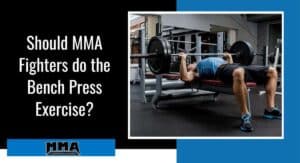
Should Martial Artists and MMA Fighters do the Bench Press Exercise?
The bench press is a popular exercise among bodybuilders, power lifters, and fitness enthusiasts. For most guys growing up, at least in one time in their life… Someone ask them, “how much you bench?” However, for martial artists and MMA fighters, the bench press can be a controversial exercise. Some believe that the bench press can improve strength, power, and overall performance in MMA. Others argue the bench press is not a functional exercise for MMA athletes and that it can detract from other training that is needed. Short, there are so many hours in the day and the week for training. Is this the best use of your time? In this discussion, we will examine the arguments for and against doing the bench press exercise for martial artists and MMA fighters. Arguments for Doing the Bench Press Exercise Improving Strength and Power: The bench press is an excellent exercise for building upper body strength and power. It targets the chest, shoulders, and triceps, which are all important muscle groups for martial arts and MMA fighters. Increasing the strength and power in these muscles can help improve punching power, grappling ability, and overall physical strength. It’s one of the “primary strength exercises” which includes the squat, deadlift, pull-up and dip. Improving Muscular Endurance: besides strength and power, the bench press can also improve muscular endurance. This is especially important for martial artists and MMA fighters who need to maintain a high level of physical performance throughout a fight. A stronger and more enduring upper body can help fighters maintain their guard, defend against attacks, and execute powerful strikes. Cross-training Benefits: While the bench press is not a “functional exercise for martial arts”, it can provide cross-training benefits. Cross-training can help fighters break through plateaus in their training, prevent injuries, and improve overall fitness. The bench press can help fighters develop upper body strength and power that can be applied to other exercises and techniques. Arguments Against Doing the Bench Press Exercise for MMA Lack of Functional Movement: One of the principal arguments against doing the bench press exercise for martial artists and MMA fighters is that it is not a functional movement. In martial arts and MMA, fighters use a wide range of movements, including punching, kicking, grappling, and throwing. The bench press does not mimic any of these movements and may not provide any significant benefits to a fighter’s performance. Time Detracted from other Training: MMA athletes have limited time to train, and every minute is precious. Some argue that time spent on the bench press is time that could be better spent on other training, such as sparring, grappling, and technique drills. These activities provide more direct benefits to a fighter’s performance and are more essential to their training. Risk of Injury: The bench press is a demanding exercise that requires proper form and technique to perform safely. If performed incorrectly, the bench press can lead to a range of injuries, including shoulder, elbow, and wrist injuries. For martial artists and MMA fighters, who rely on their bodies to perform at the highest level, the risk of injury may not be worth the potential benefits of the bench press. You will learn world-class technique as part of your curriculum as a Certified MMA Conditioning Coach. No Rotational Movement: Punching power largely depends on rotational movement, and the bench press does not involve any rotation. As a result, some argue that the bench press cannot help improve punching power or overall striking ability. Instead, fighters should focus on exercises that involve rotational movements, such as medicine ball throws, core exercises, and twisting exercises. Which Form of Martial Arts Could the Bench Press Help Most? The bench press can be beneficial for some forms of martial arts more than others. For example, traditional martial arts that focus heavily on striking, such as boxing and Muay Thai, may benefit more from the bench press than martial arts that emphasize grappling, such as Brazilian Jiu-Jitsu and wrestling. However, even for striking-based martial arts, the benefits of the bench press may be limited compared to other exercises that focus on functional movements and specific techniques. In short, grappling tends to be slower than striking. So, a slower strength movement would have more benefit than something that requires more snap and explosive speed. This is a generalization. While it can provide benefits such as improved strength, power, and endurance, and cross-training benefits, it also has its drawbacks, such as the lack of functional movement, time detracted from other training, risk of injury, and no rotational movement. The decision to include the bench press in a wide range of combat competitor’s training regimen ultimately depends on their goals, individual needs, and preferences. If an MMA fighter does the bench press, it is important to prioritize safety and proper technique to prevent injury. They should incorporate other exercises that focus on functional movements and specific techniques that are more applicable to their sport. Rotation is key to many movements related to fighting. Overall, the bench press can be a useful exercise for improving upper body strength and power, but it should not be the primary focus of a martial artist’s training routine. Other exercises and techniques that are more directly applicable to their sport should take priority to ensure that they are well-rounded and able to perform at the highest level. Want to know this information at the highest level and earn a world-renowned certification?Click here >>> https://mixedmartialartsconditioningassociation.com/mma-conditioning-coach-training-details/ If you are interested in earning your personal fitness training certification, you will want to look at the NESTA NCCA accredited course. This is our parent association.

Proven Circuit Training Methods for MMA Conditioning
Martial arts athletes know the benefit of circuit training from just how they feel, overtime, for that type of conditioning. They may not always know the specific physiological changes and adaptations, but they can feel an improvement in their conditioning. But, now it’s time to dive deeper into this topic and have a more detailed in scientific understanding of why circuit training is so beneficial for MMA fighters and other combat competitors. As a coach, it’s important for you to remember that a circuit can take place in many different formats. It can be a combination of strength and cardio. It can be strength, cardio and flexibility. You can create a circuit of purely drills that are tight scenario based. You can create circuits that combine all these things. And of course, you can add in elements for balance, reaction time and coordination. In many cases, depending on weather, you can also create these circuits outdoors which gives a fun variety for you and your athletes and gives you a break from being indoors all the time for your training. Many of our certified coaches build a business in there garage and do small circuits in the garage and in the adjacent neighborhood. What is Circuit Training? Circuit training is a form of exercise that involves performing a series of exercises in a predetermined order, with little or no rest between each exercise. This type of training is beneficial for individuals who are looking to improve their overall fitness levels and can help improve cardiovascular conditioning, muscular endurance, and muscular strength. One of the primary benefits of circuit training is that it provides an effective cardiovascular workout. This is because the exercises are performed in quick succession, with little or no rest between each exercise. This type of training is ideal for improving the body’s ability to utilize oxygen and for strengthening the heart and lungs. As a result, circuit training can even help reduce the risk of heart disease and other cardiovascular-related conditions. Do You Count Reps of Go for Time in Circuit Training? As a coach, you have options to set up the duration for each station of a circuit by number of repetitions or a given amount of time. There can be benefits for each. It depends on the type of exercise being done and sometimes the number of participants in a circuit training class. Doing exercises for repetitions can sometimes throw off the rhythm of the whole class. This is true because doing 50 revolutions on a jump rope is much different than doing 50 deadlifts. You can always adjust the number of repetitions but then too many variables cause confusion and can further slow down the class. In most cases, the duration at any given station will be 30 seconds and up to a minute. There are always options for you. Circuit training is also beneficial for improving muscular endurance. This is because the exercises are typically performed for a high number of repetitions, with little or no rest between each exercise. This type of training helps to build endurance in the muscles, allowing an MMA athlete to perform activities (punches, kicks, going for the shot, grappling) for longer periods without experiencing muscle fatigue. Improved muscular endurance is especially important for individuals who participate in martial arts and combat sports. In addition to improving cardiovascular conditioning and muscular endurance, circuit training is also beneficial for improving muscular strength. This is because the exercises used in circuit training are typically resistance-based (kettlebells, dumbbells), meaning that they require the muscles to work against an external force. This type of training helps to build muscle mass and strength, making it ideal for individuals who are looking to build muscle and improve their overall strength. When designing a circuit training program, there are a variety of different exercises that can be incorporated. Some of the most common exercises used in circuit training include squats, lunges, push-ups, pull-ups, and burpees. These exercises can be performed using bodyweight alone or with the use of additional resistance, such as dumbbells or resistance bands. There are many different types of circuits that can be created by a coach, each with its own unique set of benefits. One type of circuit is a strength circuit, which is designed to improve muscular strength. This type of circuit typically involves using heavier weights and performing fewer repetitions of each exercise. An example of a strength circuit might include exercises such as deadlifts, bench presses, and pull-ups. Another type of circuit is an endurance circuit, which is designed to improve muscular endurance. This type of circuit typically involves using lighter weights and performing a high number of repetitions of each exercise. An example of an endurance circuit might include exercises such as lunges, squats, and push-ups. A third type of circuit is a hybrid circuit, which is designed to improve both muscular strength and endurance. This type of circuit typically involves using a combination of heavy and light weights and performing a moderate number of repetitions of each exercise. An example of a hybrid circuit might include exercises such as kettlebell swings, box jumps, and rowing. A fourth format is strength, endurance, flexibility, and skill development in one. This is not for beginners. And it takes a skilled coach to develop this circuit correctly – maintaining function, form and safety. Regardless of the type of circuit used, it is important to vary the exercises and the order in which they are performed. This helps to prevent boredom and ensures that all muscle groups are targeted. It is also important to incorporate rest periods between circuits to allow the body time to recover. An easy way to remember this is the following… If your brain is bored, your body is probably also bored. It’s time to change it up. Circuit training is a highly effective form of exercise that provides a wide range of physiological benefits. This type of training is ideal for individuals who are looking

How Does Dehydration Affect MMA Athletes?
There has always been much discussion and debate about weight cuts for competition. Should we? Shouldn’t we? How much is OK? How much is dangerous? Some organizations allow IV rehydration. Others do not. But what is the real danger to the body? How does this temporary or permanently affect the brain, heart, and other vital organs such as the kidneys? As a Certified MMA Conditioning Coach, you will dive deep into this topic as part of your studies. However, let’s touch on the subject here to learn some fundamentals. Dehydration is a common problem in the world of MMA, and it can significantly impact the performance of competitors. Whether it’s a grueling training session or an intense competition, dehydration can lead to a host of negative effects on the body, including impaired brain function, reduced physical performance, and even serious health concerns. In this lesson, we will discuss in detail how dehydration can hurt the performance of mixed martial arts competitors. Here’s an additional article on how dehydration lowers sports performance. Effects of Dehydration on Physical Performance for Combat Athletes One of the most significant effects of dehydration on martial arts competitors is a reduction in physical performance. When the body is dehydrated, it struggles to maintain the proper fluid balance necessary for optimal performance. This can lead to a range of issues, including reduced endurance, increased fatigue, and impaired strength and speed. Research has shown that even mild dehydration can have a negative impact on physical performance. For example, a study published in the Journal of Athletic Training found that dehydration of just 2% of body weight led to impaired performance in tasks such as lifting weights, running, and jumping. This study also found that dehydration caused an increase in heart rate and a decrease in body temperature, further highlighting the negative impact of dehydration on physical performance. Effects of Dehydration on the Brain In addition to affecting physical performance, dehydration can also have a significant impact on brain function. The brain is a highly water-dependent organ, and dehydration can lead to impaired cognitive function, decreased alertness, and a reduction in reaction time. These effects can be particularly dangerous in martial arts, where split-second decision-making and lightning-fast reflexes are crucial. Research has shown that even mild dehydration can lead to significant impairments in brain function. For example, a study published in the Journal of Nutrition found that dehydration of just 1% of body weight led to impaired cognitive function, including decreased attention and increased fatigue. This study also found that dehydration led to a reduction in reaction time and an increase in errors during cognitive tasks. Obviously, this affects executing techniques optimally. Effects of Dehydration on the Heart Dehydration can also have a negative impact on the heart. When the body is dehydrated, the blood becomes thicker, making it more difficult for the heart to pump blood throughout the body. This can lead to an increased heart rate and an increased risk of heart attack or other cardiovascular events. Research has shown that dehydration can have a significant impact on heart function. For example, a study published in the Journal of the American College of Cardiology found that dehydration caused an increase in heart rate and a decrease in cardiac output. This study also found that dehydration led to an increase in blood pressure, which can further increase the risk of cardiovascular events. Think about it. If your heart rate increases more than optimal, it’s going to decrease your performance in most cases. Keeping your heart rate lower, and in control, gives you more control over your breathing and you’re a full toolbox of techniques. Serious Health Concerns Related to Dehydration in MMA In addition to the immediate negative effects on physical performance and brain function, dehydration can also lead to serious health concerns in the long term. For example, chronic dehydration has been linked to a range of health issues, including kidney problems, urinary tract infections, and even kidney stones. Furthermore, dehydration can also lead to heat exhaustion and heat stroke, particularly in hot and humid environments. Heat exhaustion is a serious condition that can lead to nausea, dizziness, and even loss of consciousness, while heat stroke is a life-threatening condition that requires immediate medical attention. Dehydration is a significant problem in the world of martial arts, and it can have a range of negative effects on physical performance, brain function, and heart health. Even mild dehydration can lead to impairments in cognitive function, decreased endurance, and an increased risk of cardiovascular events. Therefore, it is crucial that martial arts competitors take steps to ensure they are properly hydrated before, during, and after training and competitions. Here’s another article on the science of hydration. Start your successful and lucrative career as a Certified MMA Conditioning Coach (click here) References: Casa, D. J., Armstrong, L. E., Hillman, S. K., Montain, S. J., Reiff, R. V Cheuvront, S. N., & Kenefick, R. W. (2014). Dehydration: physiology, assessment, and performance effects. Comprehensive Physiology, 4(1), 257-285. Deschamps, K., Staes, F., Roosen, P., Nobels, F., & Bruyninckx, F. (2016). Effects of dehydration on cognitive performance, symptoms of perceived exertion, and heart rate in karate athletes. Journal of Human Kinetics, 51(1), 9-17. Eichner, E. R. (2012). Dehydration in the martial arts. Sports Medicine, 42(12), 1045-1051. Goulet, E. D. (2012). Dehydration and its effects on performance. In Essentials of sports nutrition and supplements (pp. 323-336). Humana Press. Kenefick, R. W. (2018). Dehydration: physiology, assessment, and performance effects. Handbook of Clinical Neurology, 157, 303-319. Shirreffs, S. M. (2003). Markers of hydration status. European Journal of Clinical Nutrition, 57(Suppl 2), S6-S9. Shirreffs, S. M., & Sawka, M. N. (2011). Fluid and electrolyte needs for training, competition, and recovery. Journal of Sports Sciences, 29(Suppl 1), S39-S46.